

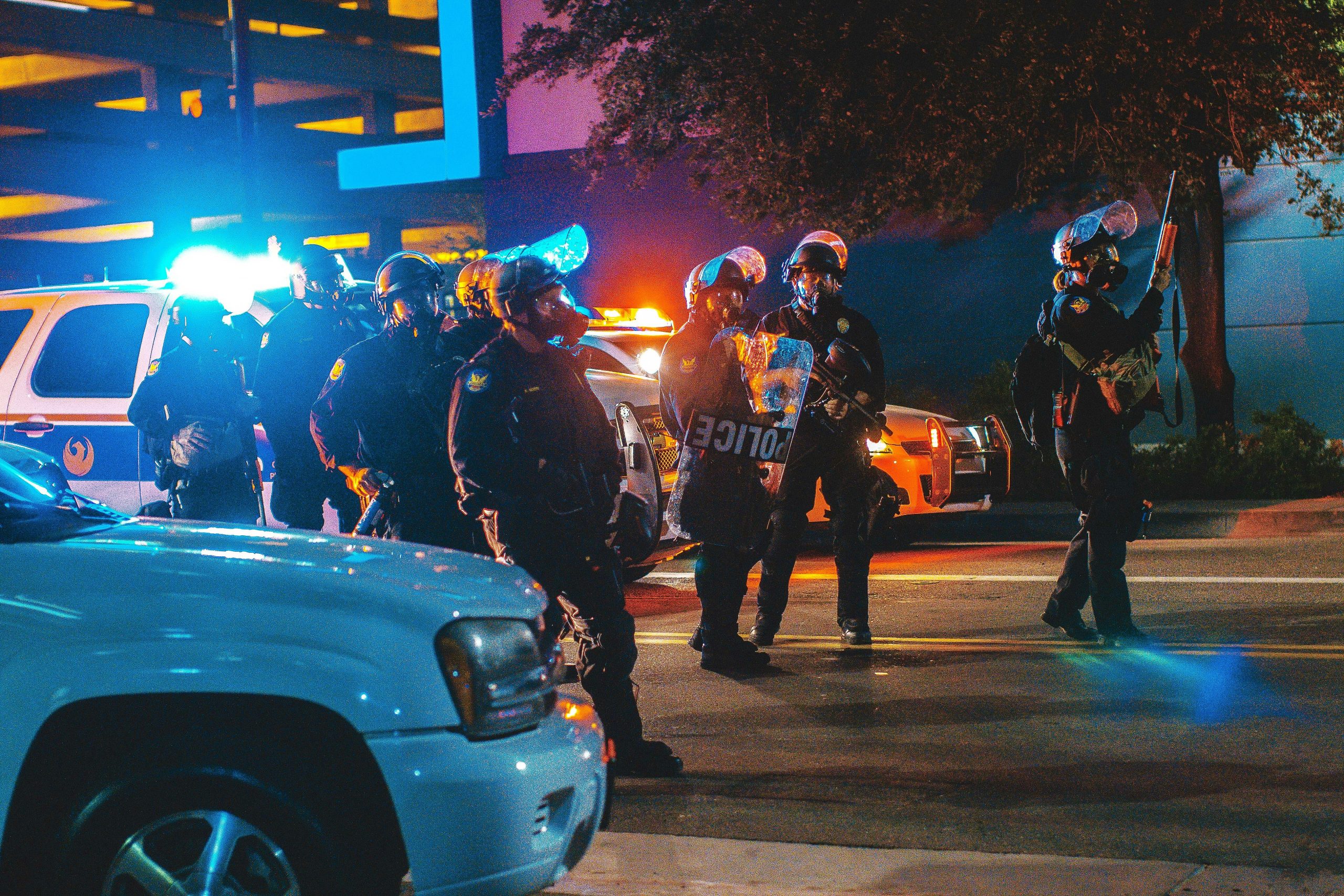
Body cameras were supposed to be a clean solution. Put a camera on every officer, and the disputes that once turned on “he said, she said” would resolve into an objective record. No more contested accounts of use-of-force incidents. No more officers’ reports going unchallenged. Just footage — verifiable, timestamped, complete.
That turned out to be a significant oversimplification. A decade into widespread body-worn camera deployment, the legal questions surrounding this footage have become some of the most contested in criminal and civil law. Who controls it? When must it be released? Can it be used without the officer who filmed it present to testify? What happens when it’s missing? And now, as artificial intelligence begins sifting through millions of hours of recordings, an entirely new layer of constitutional complexity has arrived.
Body camera footage isn’t a simple answer. It’s a new source of legal conflict — one that is reshaping evidence law, civil rights litigation, public records doctrine, and the mechanics of criminal trials simultaneously.
Key Takeaways
- More than half of U.S. states now mandate body cameras for law enforcement, but state laws governing when footage must be activated, retained, and released vary enormously — creating a patchwork of rights that differ dramatically depending on jurisdiction.
- In Baez v. Commonwealth (Va. Dec. 19, 2024), Virginia’s Supreme Court ruled that body-worn camera footage is not inherently hearsay or a testimonial statement under the Confrontation Clause — but whether specific content within the video qualifies as hearsay remains an open, case-by-case determination.
- Jefferson County, Colorado prosecutors went from handling 36,000 videos totaling 24,000 hours in 2022 to 67,700 videos totaling 41,000 hours in 2025 — and felony attorneys are each responsible for reviewing 400 hours of body-cam footage within 21 days of a case being filed.
- Families of people killed by police sometimes wait months or years to obtain footage, driving a separate wave of public records litigation against departments that invoke ongoing-investigation exemptions to block disclosure.
- A May 2026 study by researchers at the University of Michigan, UC Davis, and Stanford found that AI analysis of thousands of body camera recordings revealed underreported police stops and troubling racial disparities in officer interactions — raising new Fourth and Fourteenth Amendment concerns.
- When footage that should exist is missing, courts and legislatures are wrestling with whether defendants should receive an automatic evidentiary benefit — and proposed federal legislation has sought to codify exactly that presumption.
The Legal Foundation: What Footage Actually Is in Court
Before body cameras, video evidence in criminal cases came from fixed security cameras, dash cams, or bystander recordings — each with its own evidentiary chain. Body-worn cameras introduced a new category: recordings made by a law enforcement officer, as part of their official duties, that may later be offered against the person who was being recorded.
That creates a thicket of evidentiary questions that courts are still working through.
The most significant recent ruling came from the Virginia Supreme Court in Baez v. Commonwealth, decided December 19, 2024. The court held that a video recorded on a body-worn camera “is not inherently a testimonial statement that automatically implicates the Confrontation Clause, even if created by law enforcement while engaging in their official duties.” The Sixth Amendment’s Confrontation Clause guarantees defendants the right to cross-examine witnesses against them — and the question was whether body camera footage, absent the filming officer’s testimony, constitutes a “testimonial statement” that triggers that right.
The Virginia court said it depends on what’s in the video. If an officer’s on-camera conduct is “matter-of-course” — a routine search incident to arrest, for instance — those actions are not hearsay because they weren’t intended as an assertion of any fact. But if the footage captures a statement or conduct specifically intended to assert something, the analysis changes. The video can also be authenticated by any witness who observed the relevant events, not just the officer who wore the camera. This ruling clarified a contested area but did not resolve it entirely — the line between “routine conduct” and “assertive conduct” will continue to be litigated case by case.
California’s courts reached a different edge of the same problem. In a ruling interpreting whether body camera footage can substitute for live witness testimony, California’s Supreme Court held that footage capturing a victim’s statements does not automatically qualify as a “spontaneous statement” hearsay exception — meaning it cannot simply replace a live witness at trial without additional legal justification. Courts rejected the categorical approach prosecutors sought, requiring instead a case-specific balancing of due process rights.
These rulings reflect a broader truth: the law of body camera evidence is still being written, and different courts are drawing lines in different places.
The Volume Crisis: When Transparency Creates Its Own Problem
Even where legal admissibility is resolved, a second crisis has emerged — one that is overwhelmingly practical but carries serious legal consequences.
In Denver alone, forensic investigators have seen a 600 percent increase in audio and video evidence over the last five years. A run-of-the-mill vehicular homicide case now generates up to 90 hours of body-worn camera and dashcam footage, compared to zero in 2017. Even minor misdemeanors can produce a terabyte of digital evidence — one trillion bytes.
Jefferson County, Colorado District Attorney Alexis King offered perhaps the starkest illustration of what this means in practice. Her felony attorneys handle roughly 100 cases each, and each case carries an average of 4 to 6 hours of body-worn camera footage. That translates to each attorney being “responsible for reviewing 400 hours of video to ensure nothing is missing within 21 days of a case being filed.” Her office went from handling 36,000 videos totaling 24,000 hours in 2022 to 67,700 videos totaling 41,000 hours in 2025.
The systems don’t communicate with each other. Law enforcement agencies have increasingly expensive contracts with body-cam vendors like Axon, and that digital data doesn’t always transfer easily to attorneys and courts. Some district attorneys don’t have premium subscriptions that allow seamless transfers, costing hours of staff time in workarounds. Rural agencies often lack the funding to store footage at all. As one Colorado district attorney put it: “There are the haves and the have-nots in terms of funding.”
This isn’t merely an administrative headache. Missed footage — footage that exists but wasn’t reviewed — can lead to wrongful convictions, suppressed exculpatory evidence, or Brady violations when prosecutors fail to disclose material that should have been disclosed. The explosion of video evidence has created a constitutional compliance problem inside the practical problem.
The Missing Footage Problem
The inverse of too much footage is footage that should exist but doesn’t — and that situation carries its own complex legal consequences.
Colorado’s 2020 law requires full disclosure of body camera footage within 21 days of a police shooting. Similar mandates exist across many states. But in practice, cameras that weren’t activated, footage that was “corrupted,” recordings that were deleted, or video that is withheld pending an “ongoing investigation” have all become recurring flashpoints in litigation.
Attorney Ben Crump, who has represented families in numerous high-profile police misconduct cases, described the pattern bluntly in a Pulitzer Center investigation: “We filed public record lawsuits, Freedom of Information Act, Sunshine Law, lawsuits constantly. But regrettably, most state supreme courts and most state legislatures have sided with police unions to block access to transparency.”
The case of 18-year-old Calvin Cains III — shot to death by deputies from the Jefferson Parish Sheriff’s Office in Louisiana, the same department where his mother had worked for years — illustrates the problem. Police refused to release footage, citing an ongoing investigation. His mother sued. Organizations like Justice Lab in Louisiana have been taking similar legal action across multiple cases, arguing that “ongoing investigation” has become a default shield against any disclosure.
The federal legislative response has proposed a structural fix. The proposed Federal Police Camera and Accountability Act would establish a “rebuttable evidentiary presumption” in favor of any criminal defendant who “reasonably asserts that exculpatory evidence was destroyed or not captured.” In other words: if footage that should exist doesn’t exist, courts would start from the assumption that it would have helped the defendant — a presumption that law enforcement would have to overcome with affirmative evidence. This provision hasn’t passed into federal law, but it reflects the direction courts are increasingly moving on their own in individual cases.
The Access Battle: Public Records vs. Investigative Privilege
A third legal front involves not what happens inside courtrooms but what happens before a case ever gets there: who gets to see footage, and when.
State laws on public release vary so widely they might as well be from different countries. The New Jersey Supreme Court ruled unanimously in January 2025 that government officials cannot refuse to disclose body camera footage to the people who are the subject of the recordings — with very limited exceptions. The court held that neither the state’s Open Public Records Act nor prior judicial case law creates automatic confidentiality for footage of people accused of but not charged with crimes.
North Carolina’s Supreme Court addressed a different access question in October 2025: the process by which defendants can seek footage in the first place. In a 5-2 decision, the court confirmed that defendants must file petitions in Superior Court — not simply serve a subpoena on a police department — to obtain law enforcement recordings. The practical effect is another procedural hurdle between defendants and potentially exculpatory footage.
The R Street Institute’s comprehensive 2025 review of body camera policy notes that “families of people killed by police sometimes wait months or years to see the footage, which can result in lawsuits and erode the very trust that body cameras were intended to bolster.” The intensity of litigation surrounding disclosure “indicates the possibility of a lingering resistance to body camera-related transparency laws” — not just individual agencies resisting, but a systematic institutional posture toward delay.
The AI Layer: A New Constitutional Frontier
The newest and most legally unsettled dimension of the body camera landscape involves artificial intelligence — specifically, the use of AI tools to analyze the massive volume of footage that human reviewers can no longer process manually.
A landmark study published in May 2026 by researchers at the University of Michigan, UC Davis, and Stanford analyzed thousands of body camera recordings using AI tools and found evidence of underreported police stops, troubling racial disparities in officer interactions with civilians, and widespread use of unclear and arguably coercive language during consent searches. The researchers stated their findings raise constitutional concerns under both the Fourth Amendment (protection from unreasonable searches and seizures) and the Fourteenth Amendment (prohibition on discriminatory enforcement by race and ethnicity).
The implications cut in multiple directions at once. If AI can identify patterns of racially discriminatory stops across thousands of hours of footage — patterns that would be invisible to any human reviewer working through cases one at a time — it creates the potential for systemic civil rights litigation at a scale not previously possible. It also raises questions about the reliability of AI analysis as evidence, whether officers can be subject to discipline based on AI-flagged conduct they dispute, and whether using AI for proactive review of footage changes the constitutional analysis of that footage.
The R Street Institute’s review cites a 2025 study finding that officers viewed AI-based review as “significantly less fair” than human supervisor review. Police unions have begun negotiating specifically over the terms of AI use in evaluating body camera footage — a signal that this is moving from a technical question into a labor and civil rights question simultaneously. The proposal emerging from that tension is a hybrid: AI flags footage for review, but a human makes the final decision on any disciplinary or legal action.
That seems reasonable in principle. In practice, the constitutional framework for how AI-generated alerts can be used in investigations — whether they constitute probable cause, whether they require disclosure to defendants, whether they can be challenged — is almost entirely undeveloped.
What It Means for Defendants, Plaintiffs, and the Public
For criminal defendants, the body camera landscape is one of genuine complexity. Footage can exonerate — contradicting an officer’s written report, exposing excessive force, or establishing that a search was conducted without proper consent. It can also convict, by showing precisely what happened without the softening of imperfect human memory. Incomplete footage, as defense attorneys have increasingly found, can be as legally significant as complete footage, depending on how courts handle gaps.
For plaintiffs in civil rights and excessive force cases, the access barriers are the most immediate obstacle. Most states have stringent rules on releasing footage, and even where rules favor disclosure, departments have procedural tools — ongoing investigation claims, appeals, delayed timelines — that can keep footage from families and attorneys for years. The evidentiary value of footage that arrives after a settlement has already been reached is limited.
For the public, the body camera system created a reasonable expectation of accountability that the legal infrastructure has not consistently delivered. By 2024, more than half of U.S. states mandated body camera use, creating a broad presumption that interactions were being recorded. But the legal complexity around access, admissibility, missing footage, and now AI analysis means the gap between “there’s a camera” and “the footage will produce accountability” remains wide — and is still being contested, jurisdiction by jurisdiction, case by case, in courts across the country.
